
Congratulations! If you’re a modern marketing agency owner or CEO, you’ve likely done some “digital transformation” to modernize your tech stack. Unfortunately, this doesn’t always translate into making your business more efficient or profitable.
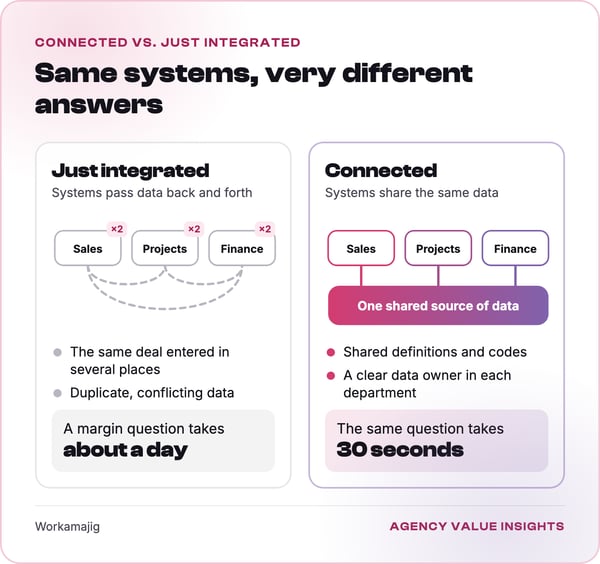
Even at what sounds like a well-run agency on paper, when it comes time to give you an answer to a basic question about client account health or margins, it may still take a day to get an accurate answer. This is because the information connected in the integrated systems is disjointed or duplicated.
This problem can occur with systems that are interoperable through connectors or even through an end-to-end agency management system.
How Agencies Use Data Makes Technology More Valuable
Some agencies with integrated but not connected systems may be dealing with duplicate data entries about a new deal in different locations within their agency management system. Executives want sharp, quick answers that help them see the bigger picture for how to grow the business. A new project in a new industry could bring a host of questions from senior executives about whether this could be an untapped revenue stream.
To ensure senior leaders have the information they need in 30 seconds rather than a day, agencies should create unified data entry definitions and codes. This can make it easier to have a holistic perspective of information across the business when pulling up a code or provide visibility into data duplicates in tech systems that need to be resolved.
Close Gaps with Your Managers
Beyond definitions and codes, agency owners can boost the connection of their systems and data by establishing clear owners within each department responsible for entering finance, project, and staffing information.
These are the same managers who should be presenting in your monthly and quarterly business reviews. This way, senior executives get the answers they need efficiently, their technology purchases prove their ROI, and should a potential buyer come knocking, the entire house is in order for due diligence.