

Project sponsors play an important part in any successful project, providing high-level oversight and the authority to green-light resources and project initiation.
Without them, projects risk lacking high-level support, clarity, and sufficient resources.
In this guide, we’ll explain the responsibilities of the role, what’s expected during each project phase, and how you can learn to be an effective project sponsor.
Key Takeaways:
- A Project Sponsor initiates a project and is responsible for the ‘why’ in a project’s success.
- With a project sponsor, projects are 2.5x more likely to succeed.
- Project sponsors provide high-level oversight for a project, with authority over resources and signing off.
- You’ll learn the clear difference between a project sponsor and a project manager.
- In this guide, you’ll learn how to be an effective project sponsor.
Project Sponsor Definition
A ‘Project Sponsor’ is the person (or people) responsible for the overall strategy, budget, and success of a project.
Usually, they are senior management or leaders equipped with the authority to provide funding, approval, and high-level oversight for a project.
Project sponsors are ultimately accountable for the outcome of a project and keep the project aligned with business goals.
Project Sponsor vs. Project Manager: What’s the Difference?
It can be easy to confuse project sponsors and project managers at first glance, as they both play a critical, authoritative role in a project. But the differences are distinct.
Project managers handle the ‘how’ in a project, such as ‘how can we achieve our goal?’ ‘What’s needed from the team members?’, and ‘what timelines need to be managed?’.
A project sponsor, however, handles the ‘why?’. They focus on the vision, strategic alignment, funding capabilities, and governance. They’re less involved with the nitty-gritty, day-to-day outlook, and more with the overarching vision.
Projects Sponsors vs. Project Managers |
|
|
Project Sponsor |
Project Manager |
|
Decide on the ‘why’. |
Decides on the ‘how’. |
|
Gives a high-level overview of the project. |
Is involved in the day-to-day running of a project. |
|
Accountable for success from a business perspective. |
Accountable for delivery. |
|
Approves budget and resources. |
Manages schedule and tasks on a personal level. |
|
Typically, a senior leadership role. |
Typically, a professional, operational role. |
Project Sponsor Responsibilities
A project sponsor is responsible for guiding the project from a business and leadership perspective. This requires a broad skill set and a deep knowledge of the company’s operations.
Usually positioned above a project manager and just below board level, the role of the project sponsor includes responsibilities such as:
Primary Responsibilities of a Project Sponsor
- Defining the vision: They must justify starting the project via a business case document, setting the criteria for success, the project benefits, risks, and costs, and then presenting this evidence to those who decide on investments.
- Governance: They must create and maintain the accountability that surrounds the project, such as who must report to them and who is making the big decisions.
- Securing resources: They will approve and propose the need for project funding, budget, personnel, and other resources required to make the project a success.
Is a Project Sponsor Required?
Skipping or underestimating the use of a project sponsor is a questionable idea.
Without one, you lack someone with a bird's-eye view on the project, equipped with the authority to make momentum-shifting decisions. Teams will face inconsistent messaging, struggle in decision-making battles, and generally feel frustrated.
What Does a Project Sponsor Do During Each Phase?
The tasks a project sponsor completes will vary as the project progresses, so we’ve broken them down for you into their key stages:
Initiation Phase
- Initiates a project: They start by validating the business case, including the criteria for success.
- Secure buy-in: They propose the project to executives, gaining approval and for the project to start.
- Appoint a project manager: A project manager must be selected. This is critical, as they’ll be responsible for how the project is executed. Managers should be professionally qualified, team leaders, and able to communicate well with the project sponsor.
- Appoint a steering committee: The steering committee is a group of high-level stakeholders who can share advice to guide the project at any moment. This choice can be pivotal, as they provide a slightly detached perspective, rather than being involved in the day-to-day work of a project.
- Communicate the expectations: The business cases, goals, and requirements for success are shared with the steering committee and project manager.
Planning Phase
- Review of project plans: As the project manager puts the ‘how’ of project execution in place, the project sponsor will review and approve the detailed plans. They’ll review whether the timelines, budget, and resources fit with the strategy, goals, and feasibility.
- Communicate with the project manager: They must stay in contact with the PM while reviewing the RAID log to identify early risks and dependencies, define success metrics, and clarify the project's scope to prevent scope creep.
- Sign-off: On all project requirements.
Execution Phase
- Monitor high-level progress: During delivery, the project sponsor will monitor high-level progress, ready for escalation if there are major issues.
- Lobby: Support the need for extra resources or shifts in plans, if necessary.
- Approve or reject key changes: Changes may be needed to keep the project aligned with the business strategy.
- Support the team and manager: Provide any feasible support that the project needs, such as providing additional resources, software, or personnel.
- Share project status reports: Senior leaders will require access to project status reports so they can stay up to date, on a weekly, monthly, or quarterly basis.
Monitoring Phase
- Track high-level progress: Using KPIs, budgets, goals, meetings, and reviews to analyse progress and adjust goals or deadlines.
- Keep up morale: Leading by example, to help the team stay motivated and able to problem-solve, is advised. This can be aided with clear communication.
- Approve changes: Any need to reallocate resources, resolve problems, or address alignment is necessary if priorities or goals shift.
- Celebrate milestones: Project sponsors should give thanks and acknowledge the completion of key milestones and the team’s effort and output.
Closing Phase
- Evaluate deliverables: Ensure all deliverables meet success criteria before approving hand-off.
- Oversee client hand-off: Ensuring the deliverables have made it to the client, bringing the project to a close.
- Lead post-project reviews: They will document the lessons learned and the level of success for future reference.
- Dismissing the project: Communicating to the project team and executives that the work is done, before completing any legal requirements.
How to Be an Effective Project Sponsor
If you’re in the role of a project sponsor or executive sponsor, it’s you who is accountable for a project’s success or failure.
Leading with clear communication and strategic focus, while bringing visible support to the project team, is a great starting point.
We recommend you regularly engage with the project manager, with scheduled check-ins (such as weekly or monthly, depending on the project) to allow you to keep informed and aligned, without micromanaging.
Clear communication can mean maintaining trust and visibility between yourself and the project manager, such as by sharing any new updates that project stakeholders have, acknowledging effort, and being honest about resource feasibility.
You’ll also help the project progress smoothly by proactively securing resources and advocating for the team across the organization. This way, other departments or executives won’t get the wrong idea if demands change.
Why Are Project Sponsors Often in Leadership Positions?
Power and influence play a key role in supporting any project. Naturally, the lower the individual is in the organization’s hierarchy, the harder it becomes to have authority to make quick decisions and hold convincing discussions. As a result, project sponsors tend to be very high in hierarchy, as they can gain resources and funding and provide influence to the project manager.
What Skills Does a Project Sponsor Need?
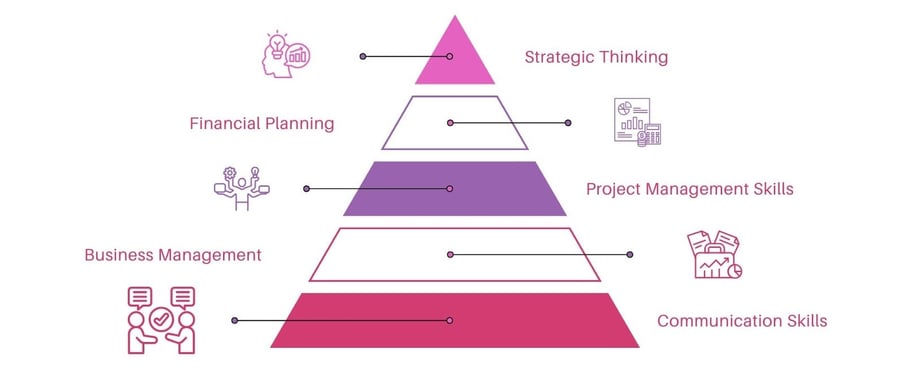
As project sponsors are usually in leadership positions, they tend to have completed relevant project management training and have a range of skills fit for the job, such as:
- The ability to think strategically.
- Proactive thinking.
- Financial planning and business management knowledge.
- Leadership qualities, such as strong communication and interpersonal skills.
- Project management skills, such as the ability to spot potential issues, project planning, scheduling, and monitoring.
Examples of Project Sponsors in an Agency
It may be helpful to see some examples of project sponsors in creative or marketing agency settings. They are typically senior leaders, such as:
Account Director for a Client Rebrand
Imagine a client asking the agency for a six-month rebrand. The account director will be the one who handles their $500k budget, creating a business case, appointing a project manager, and then ensuring the project continues to align with the client’s goals. They won’t be actively getting involved in the rebrand, but instead, making sure it all points in the right direction.
VP of Client Services for a Digital Campaign
The VP validates the business case, requesting that the project hit the quarterly revenue growth goals. With their level of authority, they secure software, such as Adobe Suites, for the creative teams. Later, they report the ROI figures to agency partners.
If you’re a project manager or project sponsor, we welcome you to request a free personal demo with Workamajig to learn how a powerful agency management system can transform your projects into profits.