

A project charter is an essential document to formalize the start of a project. While it has substantial legal benefits, it also helps facilitate the overall success of the project’s objectives.
Let’s talk about what this document is and how you can create one for your team.
What Is A Project Charter?
Project Charter Definition: A project charter (or project management charter) is a formal document that outlines vital details about the project before it gets approved. It serves as a rough roadmap for the project team, ensuring everyone is aligned on its goals and objectives. It’s created before project initiation as the forerunner to the project planning process.
The charter sets the tone for the project and provides a foundation for decision-making. It includes details such as the project's purpose, the stakeholders' roles and responsibilities, the business needs it fills, the timeline, and the budget. According to PMI, the main idea of a project charter is to authorize both the project and the project manager.
Some organizations initiate projects using a contract in place of a project charter. For others, a project charter can also be called a statement of work, an estimate response document, a business case, or a quote. A project is considered approved when the project sponsor approves the project charter.
Project Charter vs Project Plan
A project charter is less detailed than a project plan. It’s a short document with basic information on the main aspects of the project rather than an in-depth breakdown of a project plan. For example, a project charter will outline key deliverables, whereas a project management plan will break down each deliverable into smaller, more detailed components.
Purpose Of A Project Charter
Clarify Project Goals And Objectives
A project charter outlines the project's purpose and provides a clear roadmap for achieving the desired outcomes. Unlike a project plan, which is more in-depth, the charter serves as a reference point throughout the project, ensuring that everyone stays aligned and focused on the end goal.
By clarifying measurable project goals and objectives in a project charter, you can set the stage for a successful project outcome.
Align With Key Stakeholders
A well-crafted project charter helps to ensure clarity and understanding among team members, clients, and other project stakeholders. It also defines the resources required for project success, including personnel, equipment, and finances.
By clearly outlining these details in the project charter, stakeholders can work together to ensure that the necessary resources are available when needed. Ultimately, a project charter is a powerful tool for ensuring stakeholder buy-in and enabling everyone to work towards a common goal.
Authorize The Project Team And Project Manager
By verifying that the sponsor knows about the project and agrees that it should exist, the charter gives the project authority to start. The charter also acts as evidence that the sponsor knows who the project manager is and supports that person’s leadership of the project.
This proof gives the project manager authority over the internal project activities and the money, people, and other organizational resources necessary to accomplish the project.
Benefits Of Having A Project Charter
Document The Existence And Approval Of A Project
One of the significant benefits of having a project charter is that it documents the existence and approval of a project. It serves as a formal agreement between the project team and stakeholders, outlining the project's goals, objectives, and scope.
The project charter also defines the roles and responsibilities of each team member, providing clarity and transparency throughout the project lifecycle. By documenting the existence and approval of a project, the project charter creates a shared understanding and commitment to the project's success.
Define Project Benefits
One of the significant benefits of creating a project charter is that it provides a clear understanding of the project's benefits. By identifying the project's benefits early on, the project team can focus on delivering the desired outcomes.
Moreover, it helps align the stakeholders' expectations and ensure everyone is on the same page regarding project goals.
Refines Focus And Facilitates Process Improvement
A project charter clearly defines the project's purpose and goals, which helps keep the team on track and focused on what matters. With a well-defined project charter, team members can align their efforts toward achieving the project's objectives, ensuring everyone is working towards the same goal.
Additionally, the project charter facilitates process improvement. Outlining the project's scope and objectives enables the team to identify areas that need improvement. This, in turn, helps the team to develop better processes and procedures, which can lead to increased return on investment.
Key Elements Of A Project Charter
Since it is created before any detailed project analysis, the charter can only offer a high-level overview of the project.
Project Description
The first element of a project charter is the project description. The project description serves as a brief introduction, highlighting what needs it will address and when it will be finished.
A well-written project description will ensure that everyone involved is on the same page and understands what the project aims to achieve.
Project Scope
The project scope defines the project's boundaries and outlines the deliverables that will be produced. It can be as detailed or high-level as necessary, but it must be clear and concise to avoid confusion or misunderstandings.
Authorization of the Project Manager
One crucial element of the project charter is the authorization of the project manager. This authorization gives the project manager the power and authority to lead and manage the project from start to finish.
With this authorization, the project manager becomes the driving force behind the project, ensuring that all project activities are carried out efficiently and effectively.
High-Level Milestones
Project milestones are the key events or deliverables that mark progress toward the completion of the project. They serve as checkpoints to measure the project's success and ensure it is on track to meet its objectives. High-level milestones also help to keep the project team focused and motivated as they work towards achieving each milestone.
Budget
The budget is where you will outline the estimated costs for the project, including resources, materials, and any other expenses that may arise. Creating a realistic budget is crucial as it will help you to avoid any unexpected costs or delays. By including a general budget in your project charter, you can ensure that everyone involved is on the same page and that you have the resources you need to complete the project on time and within budget.
Signatures
The last element of the project charter is crucial to ensure that all parties involved agree and commit to the project. This step should not be taken lightly as it signifies the official initiation of the project. The signatures represent the commitment of each stakeholder, including the project sponsor, project manager, and team members, to fulfill their roles and responsibilities to ensure the project's success.
Others
In addition to the standard elements typically included in a project charter, several other important elements can be added to ensure that your project is well-planned and well-executed. These elements include key performance indicators (KPIs), project risks, issues, assumptions, and dependencies.
How To Write A Project Charter
Organize Project Information
Before you can start putting your project charter together, you must organize all the necessary information about the project. This includes defining the project's purpose, objectives, scope, stakeholders, and potential risks. Once all the essential information is gathered, you can start outlining the project charter.
By organizing all the necessary information beforehand, you can ensure that the project charter is comprehensive and practical, ultimately leading to a successful project outcome.
Plot Your Project Timeline
Treating your project charter as a small project itself can be an effective way to manage your timeline and resources efficiently. By breaking down the project into smaller, manageable tasks, you can identify potential roadblocks and plan for contingencies.
To do this, use a platform like Workamajig. Create and assign tasks, add deadlines, and consolidate all your charter documents and communications in one platform so they’re easy to manage and compile. This approach will also help you stay on track and ensure that you're making progress toward completing this vital project document on time.
Choose A Template
To ensure that you create a comprehensive and effective charter, it is essential to choose the right template. The first step is to identify your project's needs and goals, which should be SMART: specific, measurable, achievable, realistic, and time-bound. This will help you determine the project charter template type that best suits your requirements.
Various templates are available online, each serving a different purpose. Some templates are more detailed, while others are more concise. Choosing a suitable template will help you organize your thoughts and ideas and ensure your project charter is clear, concise, and complete. Additionally, templates help ensure consistency across projects, making it easier for stakeholders to understand the project's purpose and objectives.
Fill In Project Charter Elements
Now that you have all your project details and chosen template in place, filling in all the necessary elements, including the project name, purpose, goals, objectives, stakeholders, timelines, and budget, is essential. Don’t get too caught up with details, as these can be left to the project plan.
Collaborating with your team and other necessary stakeholders is crucial to ensure all the necessary information is included in the project charter. By working together, you can identify potential project risks, set realistic goals, and establish a clear action plan.
Review And Polish
Congratulations! You have completed the initial steps of writing a project charter. But wait, there's one final step left - reviewing and polishing. This step may seem small, but it's incredibly important. It's your last chance to make sure everything is in order before presenting it to stakeholders.
Take the time to review the document carefully, check for any errors, and ensure that all necessary information is included. This will help you understand everything smoothly and down the line.
Common Project Charter Risks and Constraints
We’ve briefly mentioned including risk management in your project charter, but since the risks are so common, it’s worth pointing out what they are. The number one roadblock project managers face with a project charter is scope creep. It’s all too easy for the carefully planned project charter to become derailed, one detail at a time, because variables like budgets and time were not kept in scope. To avoid scope creep, you’ll want to develop a scope statement that is read, understood, and signed by stakeholders before the launch of the project.
Issues also commonly come up with resources and capacity. What happens if one of your employees ups and leaves for whatever reason in the middle of the project? Planning for this risk in advance by having a network of freelancers, for example, will help keep the project schedule on track even if one of your key players disappears.
Another important risk to consider in your project charter is timeline delays. While it’s important to have a baseline for when certain milestones should be reached, your timeline should also have the flexibility to accommodate reasonable delays. If milestones or deliverables need to be approved by certain parties before you can move on to another stage, planning to give these parties plenty of notice will help avoid unnecessary delays.
Defining Success Metrics in a Project Charter
Knowing the success criteria for your project and documenting them in your project charter means that you’ll have a baseline to measure progress against. Metrics such as the progressive budget utilization rate of the overall project budget and the percentage of milestones delivered on time give you key insights into overall project health.
What Comes After a Project Charter?
You’ve created a pro-level project charter. Now what?
The first thing is to get the project charter approved by all relevant stakeholders, not least importantly, the PMO. The project initiation phase should not begin before this, as time will be wasted if stakeholders object to the charter or want certain things changed. Once it has been approved, the kickoff meeting should be arranged, which will begin the project planning phase.
Project Charter Templates & Examples
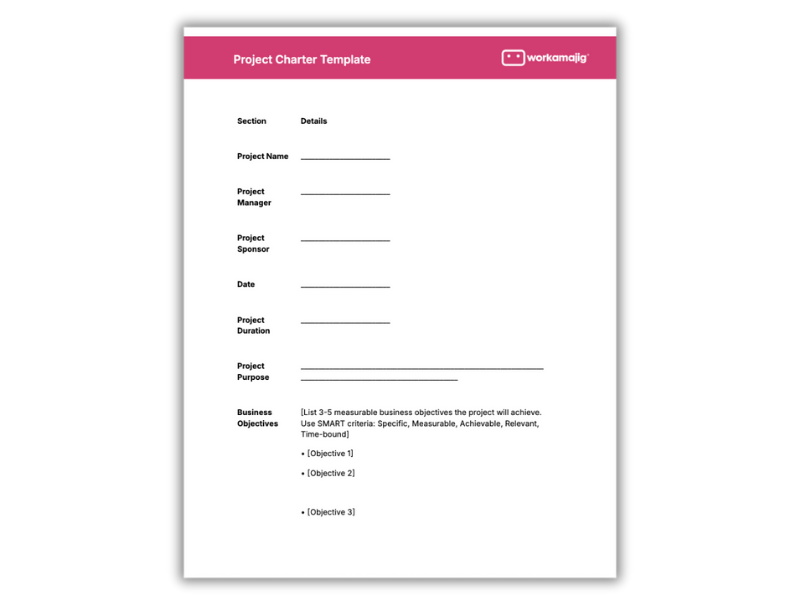
Below is Workamajig’s Project Charter Template, which you can swipe right here.
To give you an idea of what a filled-in project charter document would look like, have a look at the second tab in the template doc where we filled out a sample template.
By creating a well-crafted project charter and plan, you'll be well on your way to a successful project outcome!
Did you know that Workamajig is the only project management software that is geared specifically towards creative agency workflows? Workamajig outfits creative teams with the full suite of software needed to run a streamlined agency.
Ready to do less admin work and more of the stuff you were actually hired for?