

Meetings are an inevitable part of project management, and while some might find it tedious, real-time communication continues to be a critical part of a project’s success (when used effectively).
Often, the negative view of meetings comes from a lack of follow-through. How do you fix that?
That’s where action items come into play.
Key Takeaways:
- Action items turn meeting decisions into measurable progress.
-
Clear ownership and due dates are essential for follow-through.
-
Action items differ from action plans by driving execution, not strategy.
-
Consolidating action items into task systems prevents missed work.
-
Strong action items improve communication, efficiency, and accountability.
What are Action Items?
Action items are documented tasks, events, or activities that need to be completed. The most unique aspect of an action item is when or how it is created, which is often a result of decisions made in meetings. They are then moved to the team’s task list for future monitoring.
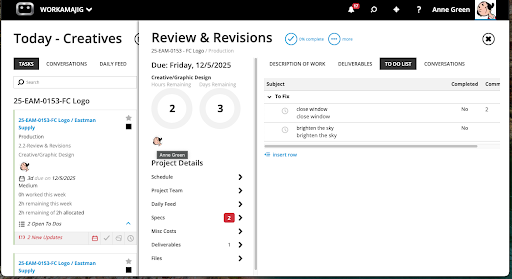
A good action item is centered around the following key points:
- A clear description of what needs to be accomplished (What)
- An assignee responsible for accomplishing the work described (Who), and
- A due date for when the work should be completed (When)
When the action items are added to the task list, they are then supported by other data such as:
- Status, to know whether the task has been completed,
- Priority Level, to help teams determine what deliverables to work on next or to identify high-value tasks, and
- Notes and comments, which further inform the task based on new insights and changes.
Action items act as a bridge between meetings and your day-to-day work, as they help outline tactical changes to your team members’ priorities based on changes and any new decisions made during the meeting.
Action Items vs Action Plans
While action items and action plans appear to be synonymous, they are far from the same, and it can be easy to confuse the two.
Action plans refer to a larger collection of documents, often outlining goals, resources, and deliverables that are tied to a specific project. Marketing plans and operational plans fall under a similar category, and offer features like timelines and dependencies that help paint a larger picture of the work. An action plan is most prominent in the early planning stages of a project.
Action items, on the other hand, simply refer to individual tasks that need to be accomplished and are present throughout the project’s execution phase. Action items emerge from changes and developments in the project, and they help build a more informed task list for teams.
How to Write Effective Action Items
Because a strong action items list makes the work look easy, team members can often underestimate the amount of care that goes into building such a list.
To help you with this, we’ve compiled the best tips and techniques for writing effective action items, as well as ensuring that action items are actually acted on.
1. Make them actionable & specific
“What exactly do I need to do,” should be top of mind when composing action items, which is best addressed by starting with active verbs. These are best because they outline single actions, and breaking down work into the smallest parts makes it easier for team members to interpret and to accomplish.
Combining this with the other key parts, a strong action items template will look something like this: Active Verb + Output + by Due Date
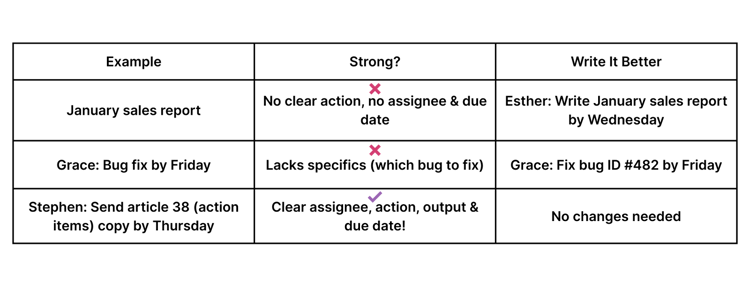
A specific task that’s important to remember is to assign action items as soon as they are written, as unassigned deliverables can often fall through the cracks.
Learning about setting SMART goals is an excellent foundation for writing good action items.
2. Consolidate action items into your task list
Few people like to be stuck in meetings—even fewer people have the time or energy to dig through countless meeting notes to figure out their next steps.
Action items often fall through the cracks this way, which makes it important to migrate action items from meetings directly into your team’s task management tool of choice.
Tracking action items allows team members to prioritize them alongside existing work, which helps with bandwidth management.
3. Bring action items to future check-ins
Another way to protect your action items from being forgotten is to take unfinished action items in a previous meeting and add them as agenda items in follow-up meetings. This helps keep teams accountable and is a good way to ensure that the action items continue to be part of relevant conversations beyond when they are created.
4. Use a template
Meeting notes can get messy, which can cascade into poor documentation of your action items.
Templates give you a consistent format to work with, making it easier to set up, as well as archive for future reference. Google Docs, for example, has a meeting minutes template that includes a section for writing a list of action items, which streamlines setup into typing a single character.
Plus, you’ll be known for running effective meetings.
By using the tips above as a foundation, you ensure that meeting action items are noticed, understood, and addressed accordingly.
Why are Action Items Important?
Everything we’ve written above hints at the following: action items are tasks. Tasks are the backbone of any project.
Our tips above for writing strong action items are designed to give your team the following advantages:
1. Better communication
Action items are the meat of a meeting summary, and making sure they reach your team members effectively is a great way to keep the project healthy.
Specific action items that are promptly migrated into the task list make it an effective tool for communicating your team’s priorities, and consolidating information allows team members to work with more autonomy instead of having to constantly ask for next steps.
2. Increased efficiency
Using templates and promptly migrating action items into your main task management tool helps with organization, and the accessibility of information reduces the mental load on all stakeholders. This allows them to focus on their most immediate, highest-value tasks.
3. Shared accountability, improved follow-through
When action items are properly documented, project progress can be more easily tracked. This gives team members a clear picture of their stake in the project, the urgency of everyone’s work, and the ability to make informed decisions about what needs to be prioritized.
This makes it especially important to attach assignees and due dates to action items, and to cascade pending work into future check-ins so that task owners don’t forget.
When action items are poorly laid out, projects are more likely to crumble under the weight of changing requirements and new information. By adding time and effort to write solid action items, you help maintain a strong foundation for team productivity and project success.
Make Action Items Work with Workamajig
An action item helps support your project by adding specificity and adaptability to your team’s workflow. By creating clear and actionable tasks, team members spend less time interpreting and more time delivering high-quality work. To bridge the gap between team meetings and work, you’ll need a project management tool that allows you to capture action items in full detail and track progress with ease.
With Workamajig, the ultimate project management software, you have an all-in-one solution for plotting tasks, allocating work, and seamlessly transitioning into task and resource management. Migrate your action items into the team’s to-do list, then use built-in collaboration and reporting tools to ensure that your team stays on top of the work, completing tasks and addressing roadblocks along the way.