

 Choosing between Scrumban vs Kanban depends on whether you want to retain Scrum’s structure and fixed-sprint work, or go for Kanban’s fully flexible, continuously flowing approach.
Knowing the impact of the two project management methodologies will help you optimize your workflow, teamwork, and ultimately get better results.
In this article, we’ll guide you through the differences between Scrumban and Kanban, so you can decide which is best for your team:
Key Takeaways of Scrumban vs. Kanban:
- Scrumban is a hybrid of Scrum and Kanban, combining sprints and Scrum’s structure with Kanban’s flexible, flow-based approach and WIP limits.
- Kanban has no timebox restrictions, while Scrumban uses sprints with added flexibility.
- Scrumban retains Scrum’s roles, sprint planning, and stand-ups.
- Scrumban is ideal for teams with a mix of planned and reactive work.
- Kanban is better for ongoing, unpredictable work.
- Using a project management software like Workamajig can help you blend the two approaches and easily track performance in real time.
What is Kanban?
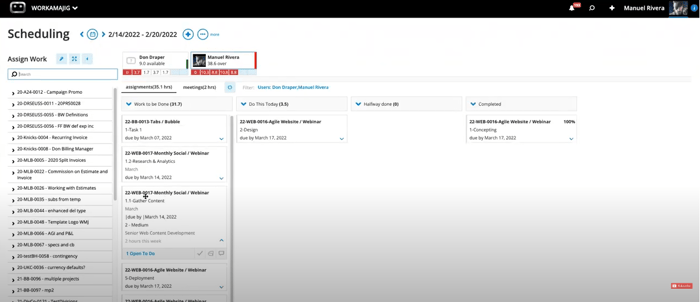 Kanban is a visualisation tool used within the agile framework to provide a continuous flow of work, progress, and improvement.
Visualised on Kanban boards, you can think of it like a conveyor belt of tasks, moving from the backlog through stages until completion.
With the ability to set work-in-progress limits (WIP limits), Kanban allows you to manage workflow, increase task visualisation, and gain flexibility with each task.
The Kanban system was developed in the automotive industry by Toyota in Japan. There, it was used to schedule the delivery of parts and goods to car assembly lines.
What Is Scrumban?
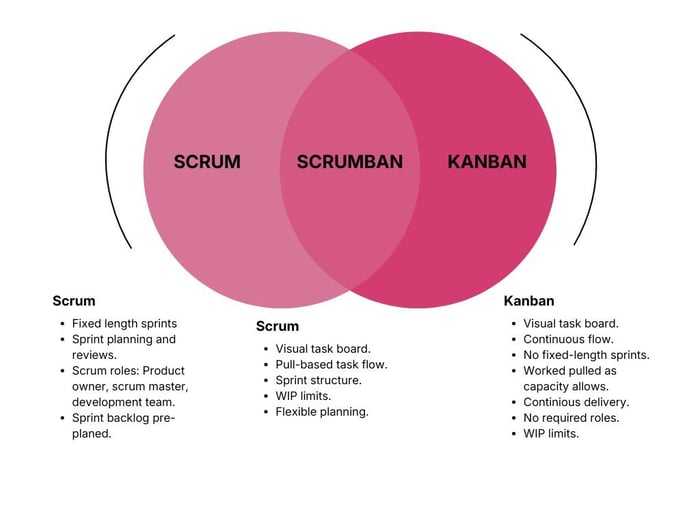
Scrumban is a hybrid combination of Kanban and Scrum.
It mixes Scrum's structure of planning and roles with Kanban’s visual, pull-based workflow.
Like regular Scrum, Scrumban uses ‘sprints’, meaning deliverables have a deadline for completion (usually two- to four-week periods).
This combination gives greater flexibility and clarity, but with that all-important solid structure.
The Difference Between Scrumban vs Kanban
Kanban and Scrumban are both methodologies used to streamline processes and optimize workflow. But there are some key differences.
|
Kanban |
Scrumban |
|
|
Workflow |
Continuous flow. |
Continuous flow, with Scrum structure and planning. |
|
Timeboxing |
No fixed sprints or deadlines. |
Uses sprint timeboxes. |
|
Roles |
Less defined, with leadership encouraged at all levels. |
Keeps Scrum’s roles and responsibilities. |
|
Planning |
Ongoing, based on capacity. |
Regular planning. |
|
Backlog pull |
Work pulled as capacity allows. |
Work is pulled, but within a sprint framework |
|
WIP Limits? |
Yes |
Optional |
|
Metrics |
Cycle time, throughput, bottleneck. |
Cycle time, throughput, and scrum-style measures. |
|
Best for? |
Teams with changing, unpredictable work. |
Teams that need added flexibility and visibility, but with scrum’s structure and sprints. |
Like Kanban, Scrumban uses a board to visualize tasks. However, for Kanban, there’s no specific time when deliverables need to be submitted. Progress is constant, and work in progress is limited (for quality control).
Meanwhile, Scrumban is time-boxed into sprints.
Teams that use Scrumban can benefit from the structure of Scrum and the flowing progress and visualization of Kanban.
Scrumban also allows teams to take advantage of Scrum ceremonies such as sprint planning, daily stand-ups, sprint reviews, and retrospectives. This allows for better team alignment and productivity, coupled with the visualization that a Kanban board facilitates.
What’s the Difference between Scrumban and Regular Scrum?
Scrum doesn’t combine with Kanban’s flexible and flow-oriented approach, making it far more rigid than Scrumban.
Scrumban is more flexible, as it borrows Kanban’s ability and adaptability qualities.
- Scrum relies on regular sprint planning and retrospectives, while Scrumban can adjust to changing demands.
- Scrum commits a team to a sprint backlog, with a rigid roadmap to success. Scrumban lets work be pulled as capacity opens up.
- Scrumban can use WIP limits to prevent bottlenecks and overstretched team members.
- Scrum performance is measured via sprint velocity and burndown charts; Scrumban uses cycle time, throughput, and bottleneck observations.
Why Do Teams Use Scrumban?
Scrumban is ideal for teams that want to use Kanban’s visual and workflow prioritization benefits, without losing the benefits of being a scrum team.
It may be right for your scrum team if the following qualities appeal to you:
- It makes visualising workflow incredibly easy, improving team alignment and teamwork potential.
- It handles changing priorities better than fixed-sprint methods, as you can adjust work as new urgent items are added to the sprint backlog.
- It improves flow by using WIP limits, which prevent bottlenecks and multitasking (which could cause burnout and inefficient focus).
- Scrum masters require less planning, as they can react to incoming tasks.
- It supports continuous delivery, so teams can release work as soon as it’s ready.
Which One Is Right For Your Business: Scrumban or Kanban?
Now that we’ve explored the differences between Scrumban vs Kanban, you may wonder which is best for your business.
Simply put:
- If you want a continuous flow without a formal structure and sprint timebox, then choose Kanban.
- If you need both control, cadence, scrum team set-up, but flexibility, choose Scrumban.
When to Use Scrumban?
When You Need The Best of Both
We recommend the use of Scrumban when your team has struggled with scrum rigidity, but still needs to work within sprints and within defined roles.
By going for the hybrid approach, you’ll be able to align on task status while still getting work done within the sprint timebox.
You Need a Flexible Workflow
Scrum works with pre-defined plans. If it’s becoming a restraint, then the mix of Kanban’s flexible workflow and Scrum’s regular retrospectives will allow you to move things around, but with a sense of control.
You Have Mixed Work Demands
If you have a blend of planned work and reactive work, then Scrumban is ideal. Instead of feeling your framework is unsuitable with each iteration, you’ll now feel it can adapt to the changing demands.
Before Transitioning to Kanban
If the idea of switching from Scrum to Kanban all at once seems daunting or chaotic, then Scrumban gives you a chance to test the waters. Accountability and leadership understanding will remain the same until you feel it’s time to make the full switch to full Kanban (where everyone can take the lead).
When to Use Kanban Instead of Scrumban
You Want a Continuous Workflow
Kanban’s work can be infinite. Unlike Scrum, there are no sprint time-boxed restrictions. So, you can continuously pull from the always-updated pull system.
This is usually best suited for teams that have continuous and unpredictable tasks, such as with support tickets or maintenance.
You Don’t Want to Reorganize Your Structure
If your team is working well in its current informal state, with no need to restructure into a Scrum team or assign new roles, then Kanban will be a fine fit. Just clarify your existing processes and roles to your team, and get to work.
You Don’t Need Regular Retrospectives
One of the key Scrum processes is to hold retrospectives at the end of each sprint. If you feel these will get in the way of your progress or restrict active collaboration, then Kanban is likely a better fit.
Work in Progress Limits Are a Priority
Although you can use WIP limits within Scrumban, they may be influenced by the time left in your sprint window.
For that reason, it can be wise to use Kanban if you’d like to set quite strict WIP limits and improve flow. For example, if you have a small team that wants to focus on deep quality rather than the speed of output, you can set limits to prevent this from happening.
Scrumban vs Kanban Based on Your Type of Team:
Design Team
Design often requires continuous improvement, with the freedom to get creative with minimal time pressure.
For that reason, Kanban is often best suited to designers trying to come up with new concepts or ideas, free from the creative-limiting restraints of sprints.
However, when it comes to actually creating the assets for release (for example, in software development), Scrumban may be a better fit, as you get the continuous flow but with sprint timeboxes.
Marketing Teams
Marketing campaigns with deadlines and coordinated launches will benefit from Scrumban’s structure and sprints, while still allowing for a continuous flow of content and ideas.
However, if you’re creating content for a client long-term (such as with blogs, social media, or emails), then Kanban’s ongoing flow will be a better fit.
Cross-Functional Teams
Product development agile teams working across different areas such as product management, design, marketing, or engineering should consider Scrumban as it aligns all stakeholders around the same sprint goals.
It also allows them to handle the continuous arrival of bugs and improvements, bringing high-quality collaboration.
But, in a more customer-facing team, where work is coming in from customers, there is no defined endpoint, so a Kanban set-up will allow you to optimize your work items without sprint formalities holding you back.
Using Scrumban and Kanban with Workamajig
Whether you’re undecided or are ready to commit to a Scrumban or Kanban framework, Workamajig supports both with templates, fully integrated data, and real-time updates.
As an all-in-one project management software, you can benefit from Kanban-style visualisations connected to budgets, timelines, and resources.
Its flexibility and ease of moving between visualisation tools mean you can go far beyond Kanban’s usual capabilities.
For example, your team can use it for task status, burndown charts, Gantt Charts, resource tracking, WIP limits, and any custom metric you depend on - all with real-time collaboration and updates.
If you’d like to learn more about how Workamajig can transform your project management, we welcome you to request a free demo with our team!
FAQs on Kanban vs Scrumban
What is the difference between Scrumban and Kanban?
Kanban is a continuous workflow method with no fixed sprints, while Scrumban is a hybrid approach that retains Scrum’s structure and sprints with Kanban’s flow practices.
What is the difference between a Scrum board and a Kanban board?
Scrum boards use fixed sprint durations and planned work, while Kanban boards allow work to be pulled freely with a continuous flow, with work in progress limits.
Can you use WIP limits in Scrumban?
Yes! Although it’s not essential, you certainly can use work in progress limits within Scrumban to prevent going over capacity.
Does Scrumban or Kanban remove team roles?
In both Scrumban and Kanban, both approaches retain the existing roles. However, in Kanban, roles are less important, with every individual encouraged to take the lead. In Scrumban, Scrum’s specific roles are usually kept.
How Can I Use Scrum with Kanban?
To use Kanban within your Scrum team, you can keep your Scrum team’s existing sprint-based structure but add in Kanban’s practices for improved flow, visibility, and WIP limits.
Recap
Kanban and Scrumban are two agile methods used to streamline and optimize workflow.
As a visual tool, Kanban supports a continuous workflow without deadlines but with crucial WIP limits. Scrumban, however, combines Kanban with the cadence and timeboxes of Scrum while retaining its team structure.
We recommend Scrumban to teams who need a sense of structure within a fluid workflow, and Kanban for teams who are looking for a more improvised, continuous workflow approach.
Interested in applying Scrumban or Kanban to your workflow? We’d be happy to help you out. Book a demo with us today, so we can help you set your team up with Workamajig, the best project management tool for creative teams.